
By: Naomi Harrigle, EdZOO
If you’ve ever been at the Akron Zoo when the sound of an emergency vehicle echoes in the distance, you may have noticed something very special. The Zoo’s resident coyote siblings, Shilah and Kaliska, often answer the call of the siren with an impressive chorus of howls, barks, and yips. To us, it may sound amusing, but these vocalizations are how coyotes communicate. Maybe Shilah is asking Kaliska to come over, or perhaps he’s letting her know everything is okay.
These littermates, born miles away from Akron at the USDA National Wildlife Research Center in Utah, were only a few months old when they came to the zoo, coinciding with the opening of Grizzly Ridge in 2013. They have thrived under the expert care of their keepers in their safe, comfortable habitat. But outside the zoo’s boundaries, life for coyotes can look very different. For wildlife living in Akron and its surrounding suburbs, survival means constantly navigating challenges created by humans. These include persistent loud noises, bright lights at night, unpredictable food sources, and dangers such as traffic collisions and conflicts with people.
Noise Pollution in the City
Noise pollution comes from a variety of sources, like sirens, traffic, and construction zones. These noises are not only stressful for animals, but they can also disrupt their behavior. For example, in songbirds, this can affect behaviors such as searching for food, finding mates, detecting predators, and communicating with their offspring. Scientists have found that some songbirds actually change their pitch and sing louder in very noisy environments. Fun fact: During the COVID shutdown in San Francisco, when traffic noise was reduced, songbirds began singing more softly, with a wider range of pitches and more complex patterns, because it was easier for them to communicate without all the background noise!
Bright, Artificial Lights at Night
Bright, artificial lights shining at night can disrupt the natural circadian rhythms of many animals. Streetlights, porch lights, and even blinking seasonal decorations can affect their behavior, driving them to forage, eat, and sing at night instead of resting. Lights can also change the way animals move through the environment, as the shadows they cast create visual “barriers” that can prevent them from moving between light and dark areas, sometimes leading to isolation. For nocturnal wildlife like bats, feeding near lights can expose them to their predators such as owls. And for other wildlife such as raccoons, opossums, and insects that have adapted to low-light conditions, bright lights at night can disorient them and send them off course.
Finding the Right Food
Food is actually plentiful in urban areas, but much of it is the wrong kind of food. Wildlife living in cities often adapt their diet to what is available, such as pizza crusts, french fries, and other human food in the trash. To us, these are normal foods that our bodies can digest, but for animals like coyotes that naturally eat rabbits, mice, and other small prey, foods high in starch, salt, and sugars can cause health problems such as diabetes and organ damage. Even pet food formulated for domesticated cats and dogs is not ideal for wildlife and can lead to malnutrition. When pet food is left out, it can attract wildlife, increase the spread of diseases, and create aggression or conflicts with other animals or humans. Natural prey, such as mice, can also become dangerous if they have consumed poisoned bait deployed to control them.
Navigating the Maze of Dangers, Including Conflicts with People
Animals living in urban environments must navigate a patchwork of fragmented habitats, including roads, buildings, other human-made structures, and greenspace. They need to identify and remember safe travel routes, while avoiding hazards like traffic and people. To minimize interactions with humans, animals may shift their activity cycles to nighttime. For instance, coyotes are naturally crepuscular, meaning they are most active during dawn and dusk. When they live in areas populated by people, they shift their activity patterns and become nocturnal to avoid humans during the day and hunt at night. That’s why many people hear coyotes howling at night or sometimes lose backyard chickens or small pets after dark.
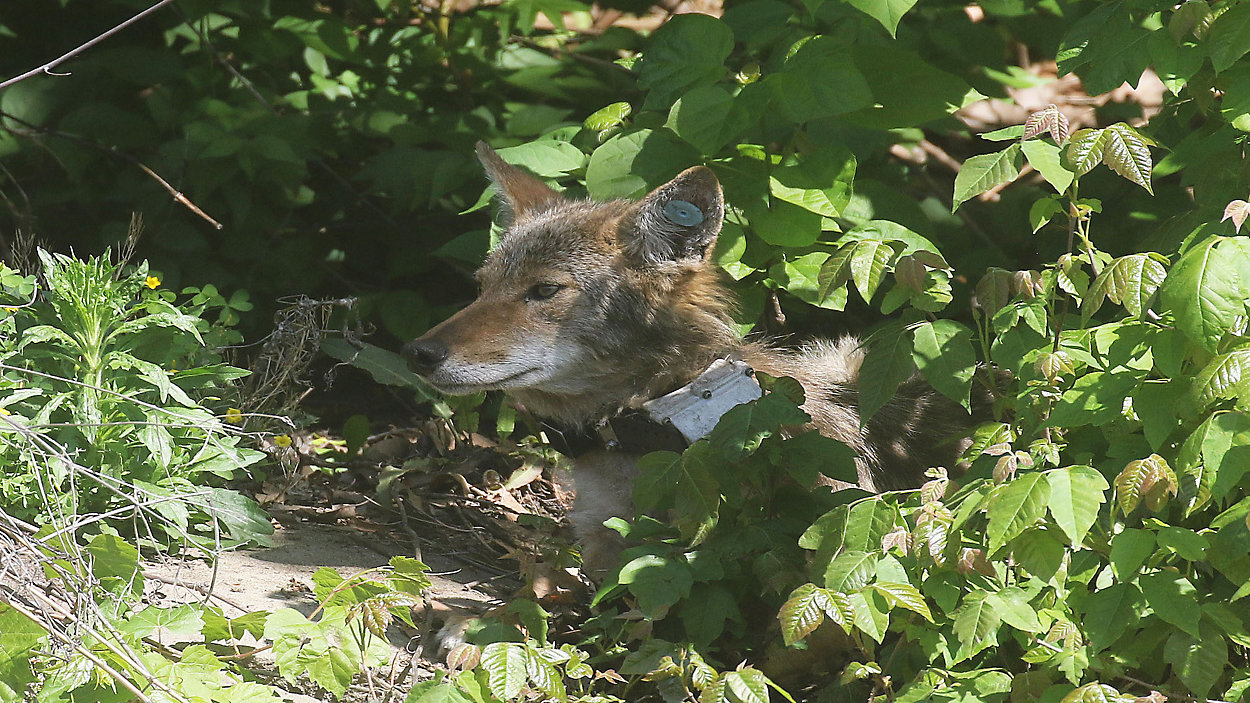
Several years ago, the Akron Zoo teamed up with Summit Metro Parks to study the coyotes living just outside the zoo in downtown Akron. Two coyotes were humanely collared and tracked, and the data showed they traveled mainly at night along railroad tracks. It appears they were using greenspaces along the Ohio & Erie Canal Towpath Trail between Summit Lake and Canal Park, feeding on geese and helping control their population.
How We Can Help Our Wildlife Neighbors
With all these challenges that wildlife in urban areas face every day, what can we do to help and support coexistence?
Around Our Homes
- Turn off or dim outside lights at night, shield bright lights, or switch them to warmer tones.
- Reduce noise around our homes by switching to electric lawn mowers and limiting the use of blowers to help animals and birds communicate more easily.
- Plant native flowers and trees in our yards to increase biodiversity.
- Prevent conflicts and the spread of diseases by not leaving pet food out.
- Keep pets inside or stay with them when they are outside. Build secure coops for backyard chickens to protect your brood.
In Our Communities
- Elect city officials who support wildlife-friendly practices, such as creating parks and greenspaces that connect habitats.
- Keep Akron and our neighborhoods clean and free from trash.
Know Who to Call (Report or Get Help)
- Ohio Department of Natural Resources (ODNR) Division of Wildlife
- Ohio Division of Wildlife Permitted Wildlife Rehabilitators 2025-2026
Coyotes and other urban wildlife are often considered pests, but they are our neighbors and play an important part in the ecosystem by controlling rodent populations and supporting biodiversity. If you see one in your neighborhood, appreciate it from a distance and don’t approach. And come visit Shilah and Kaliska here at the Akron Zoo and watch them pounce, play, and learn more about their behavior!