
Utahraptor's fossils have been mainly found in Utah—hence its name, meaning “Utah Predator.” It is the largest dromaeosaur, or raptor, that we've ever discovered. They were also more muscular than other raptors, allowing them to ambush prey, rather than chasing them down.
At the end of their long legs was a 13-inch curved and sharp talon. This "toe claw" was retractable due to Utahraptor's flexible toe joint, and was held off the ground to ensure it wasn't dulled while walking. Modern studies suggest this claw was likely used to impale and hold onto squirming prey.
Utahraptor, like most raptors, was almost entirely covered in feathers. The long feathers on the arms and the end of its tail helped it balance while running or fighting prey. While Utahraptor didn't use their "wing" feathers for flight, recent studies suggest smaller dinosaurs may have been able to glide for short periods of time.
Utahraptor at the Akron Zoo
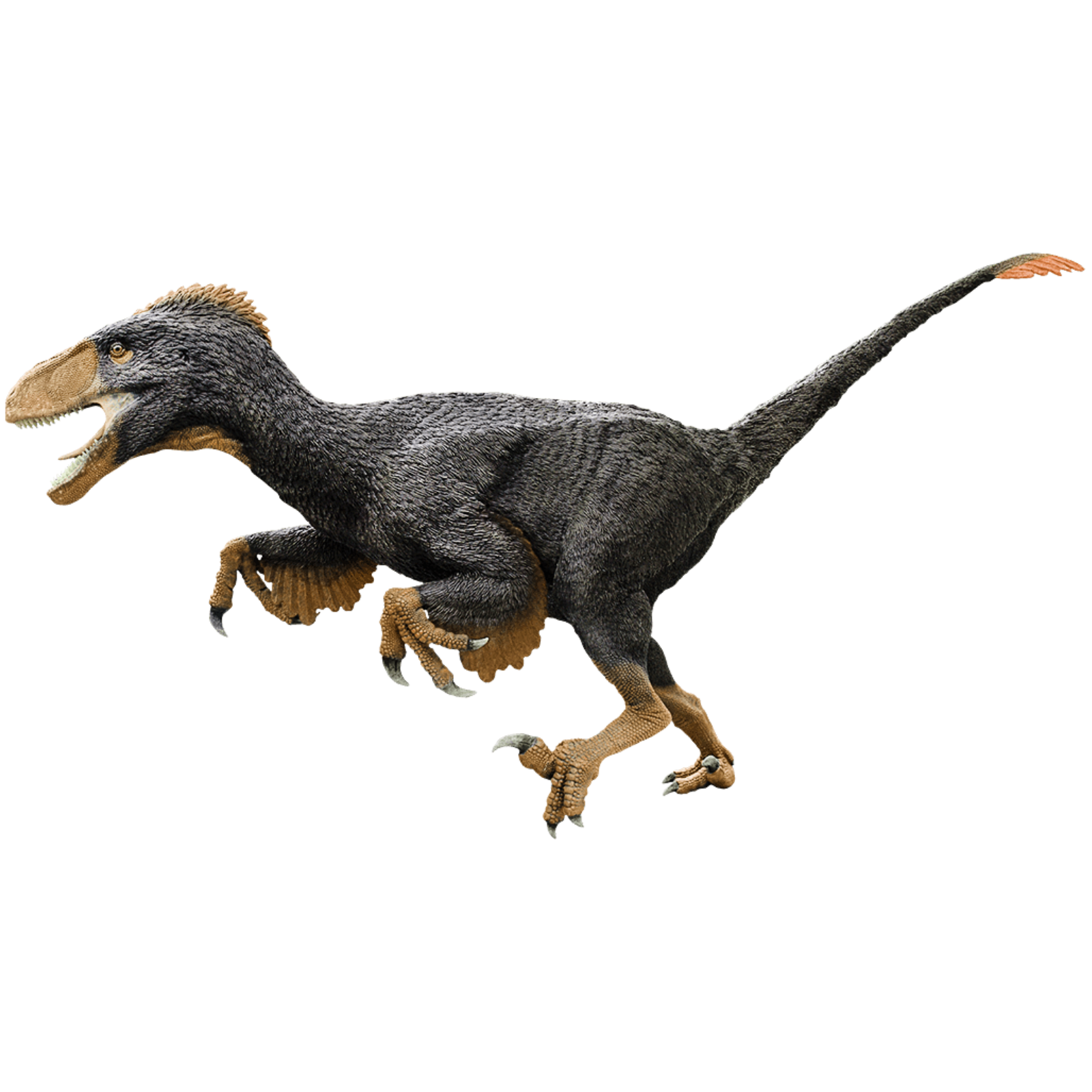
The Utahraptor is located near the picnic area in the Wild Prairie.
Presented by: