
Some early depictions of Stegosaurus show it with flat, layered back plates covering its back like a shingled roof. This is where Othniel Charles Marsh got the animal's name when he discovered it in 1877, with Stegosaurus meaning "roofed lizard." We now know that their large, bony plates protruded upwards from their backs. Recent research suggests these plates were too delicate to protect Stegosaurus. Instead, they were likely used for display or thermoregulation, similar to how a chinchilla uses their ears!
The sheer size of Stegosaurus likely helped it intimidate predators. If that didn't work, Stegosaurus also had four large spikes on the end of its tail. It would swing its tail at predators before they could attack. Despite their heavy armor, Stegosaurus still served as a food source for large carnivores like Allosaurus.
Stegosaurus at the Akron Zoo
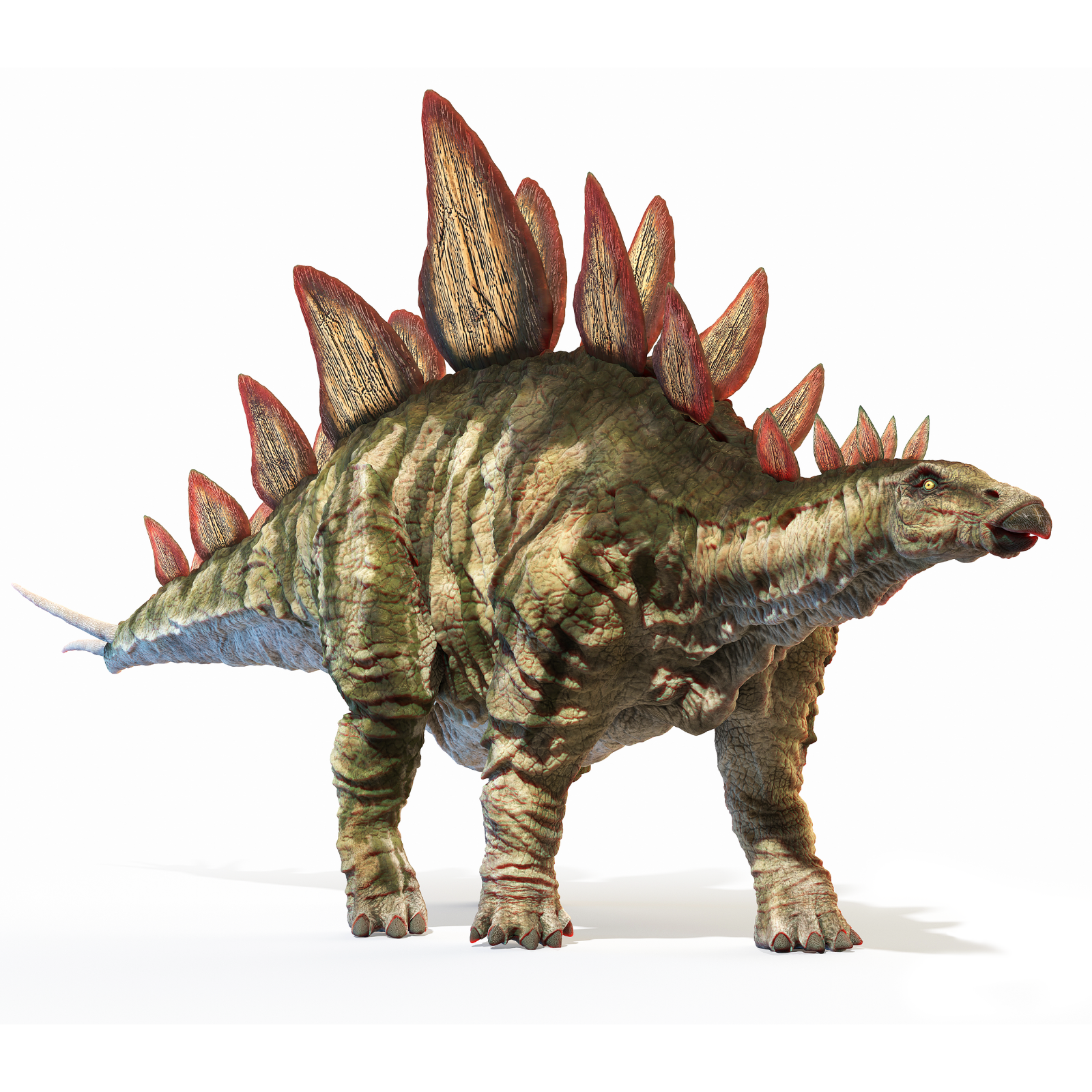
The Stegosaurus can be found near the tragopan habitat.
Presented by:
Quinn & Murphy Breidenbach