
Many remains of Protoceratops were discovered in the 1920s during expeditions through the Gobi Desert. The Protoceratops was
discovered in 1922 during one of these expeditions. It was given its name, which translates to “First Horned Face,” based on the idea that it was an early Ceratopsian dinosaur that may have given rise to the larger, more famous Ceratopsians, like Triceratops.
Like most Ceratopsians, Protoceratops had a large skull at the end of its short neck and a large, bony frill that extended out behind the skull to cover its neck. However, they did not have the Ceratopsians' iconic horns. Instead, it had bumps above its nose and eye sockets.
Protoceratops stood on four legs, with its back legs being slightly longer than its front. Their feet ended in wide, hoof-like toes that helped them more easily traverse the sandy dunes of their habitat.
Protoceratops at the Akron Zoo
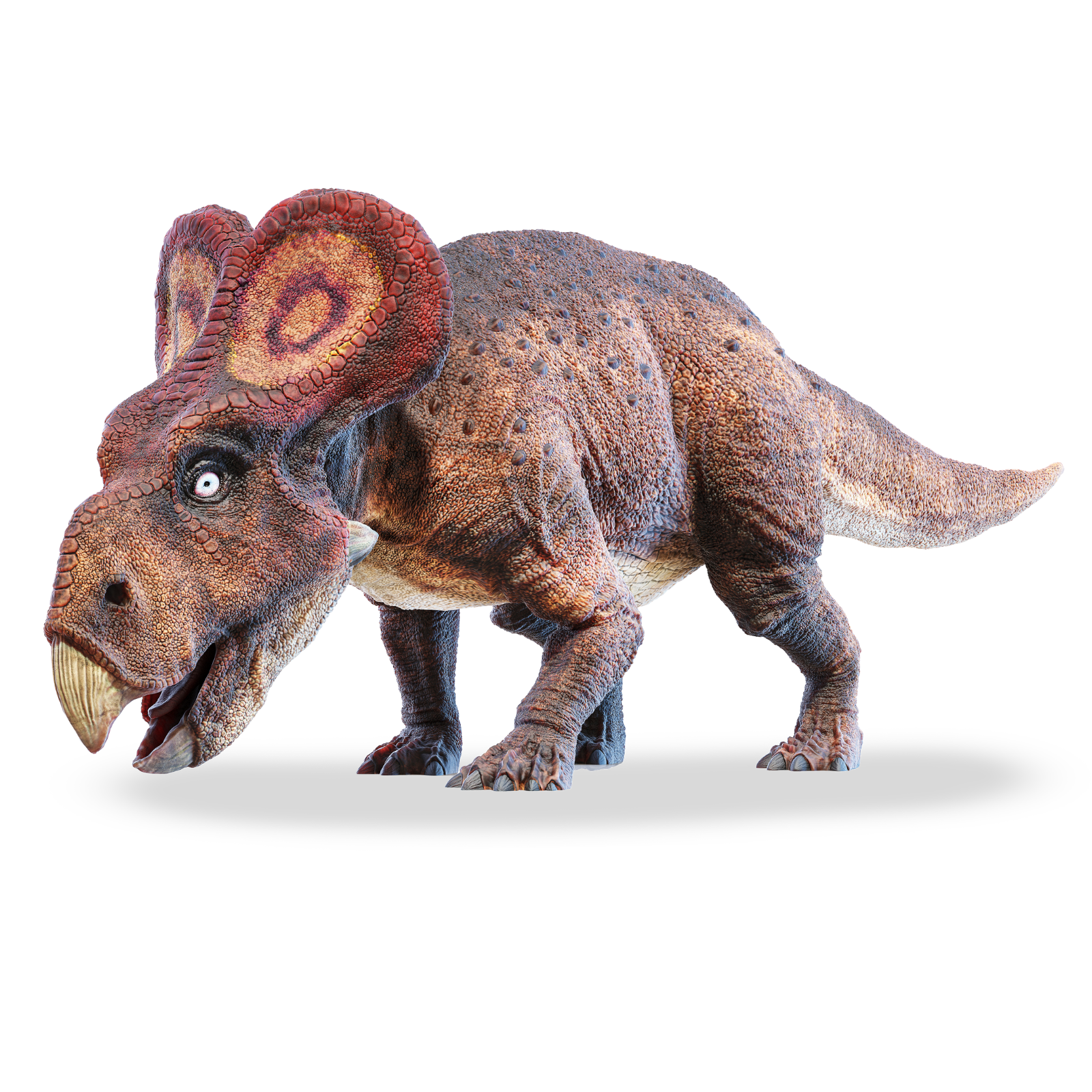
Protoceratops is located between the grizzly bear and river otter habitats.