
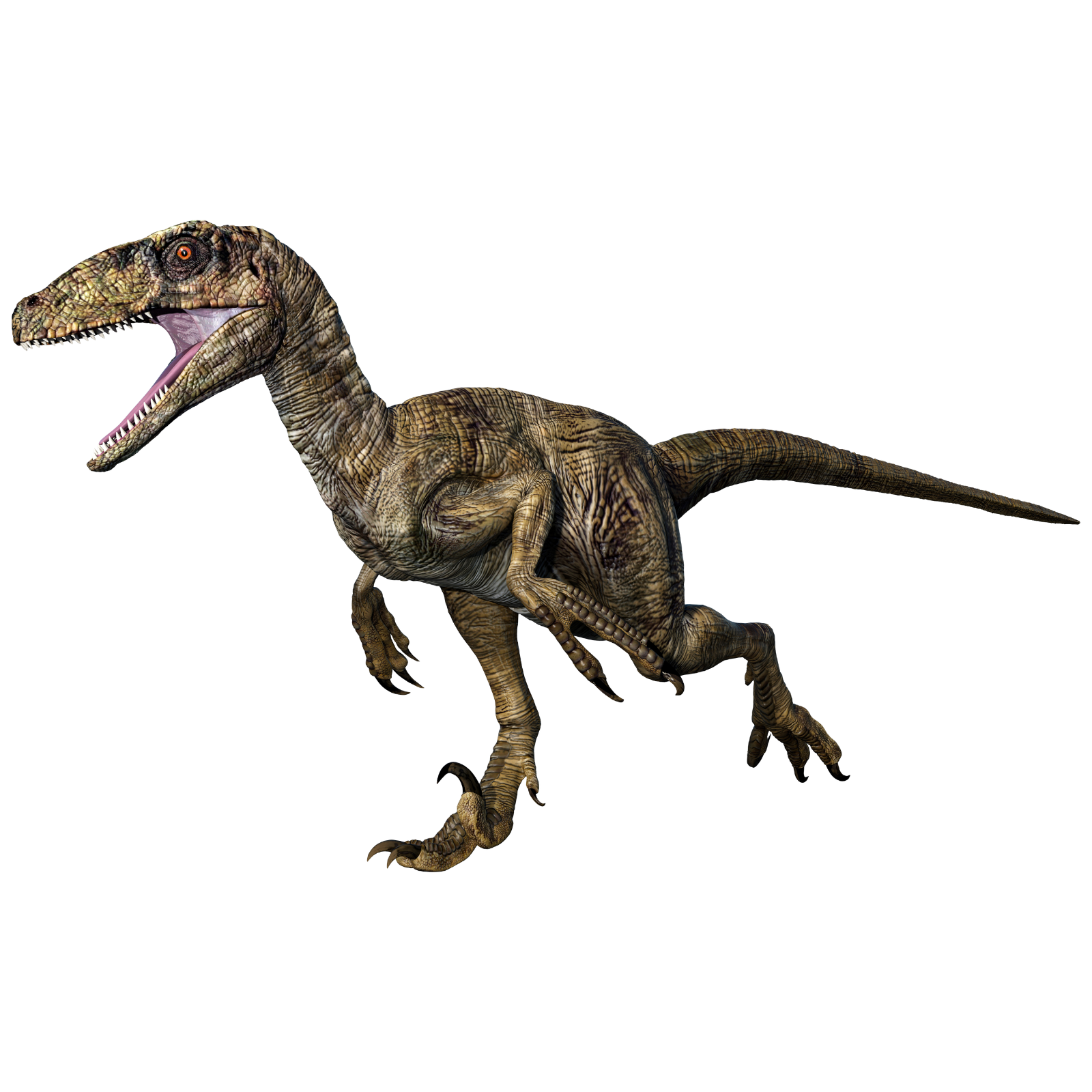
Deinonychus means "terrible claw." At the end of their long legs was a 5-inch long, curved talon. This "toe claw" was retractable due to Deinonychus' flexible toe joint, and was held off the ground to ensure it wasn't dulled while walking. Modern studies suggest this claw was likely used to impale and hold onto squirming prey.
Their long legs contained hollow bones, but studies suggest that it wasn't very fast compared to other dinosaurs. Instead, scientists suggest their hind limbs were designed for agility and jumping onto prey. Deinonychus' tail aided it in running after and jumping onto prey.
Their front legs were shorter than their back legs, but proportionately larger than similar dinosaurs. They likely used their longer arms and clawed hands to grasp onto prey. In their wrists, Deinonychus had a special curved bone that allowed them to flex their hands sideways. This was unique, as most dinosaurs did not have mobility in their wrists. This special wrist bone eventually developed into the wing mechanism that allows birds to fly.
Deinonychus at the Akron Zoo
The Deinonychus is located along the Pride of Africa train route.