
Cryolophosaurus had a forward curving crest with scalloped edges just above its eyebrow ridge. This crest, and the reptile's location in Antarctica, are the origin of its name, meaning "cold crested lizard."
While not nearly as cold and icy as it is today, Antarctica was still far away from the equator. Cryolophosaurus likely inhabited the warmer coastal regions alongside other early dinosaurs. As the largest predator we've discovered in Antarctica at the time, Cryolophosaurus was likely the apex predator of its ecosystem, helping to keep the populations of smaller vertebrates and dinosaurs balanced.
This dinosaur had long hind limbs ending in feet with three digits, short arms ending in clawed hands, an elongated neck with a narrow head and a tail to counterbalance. As a predator, Cryolophosaurus had a jaw full of sharp, pointed teeth for tearing into prey.
Cryolophosaurus at the Akron Zoo
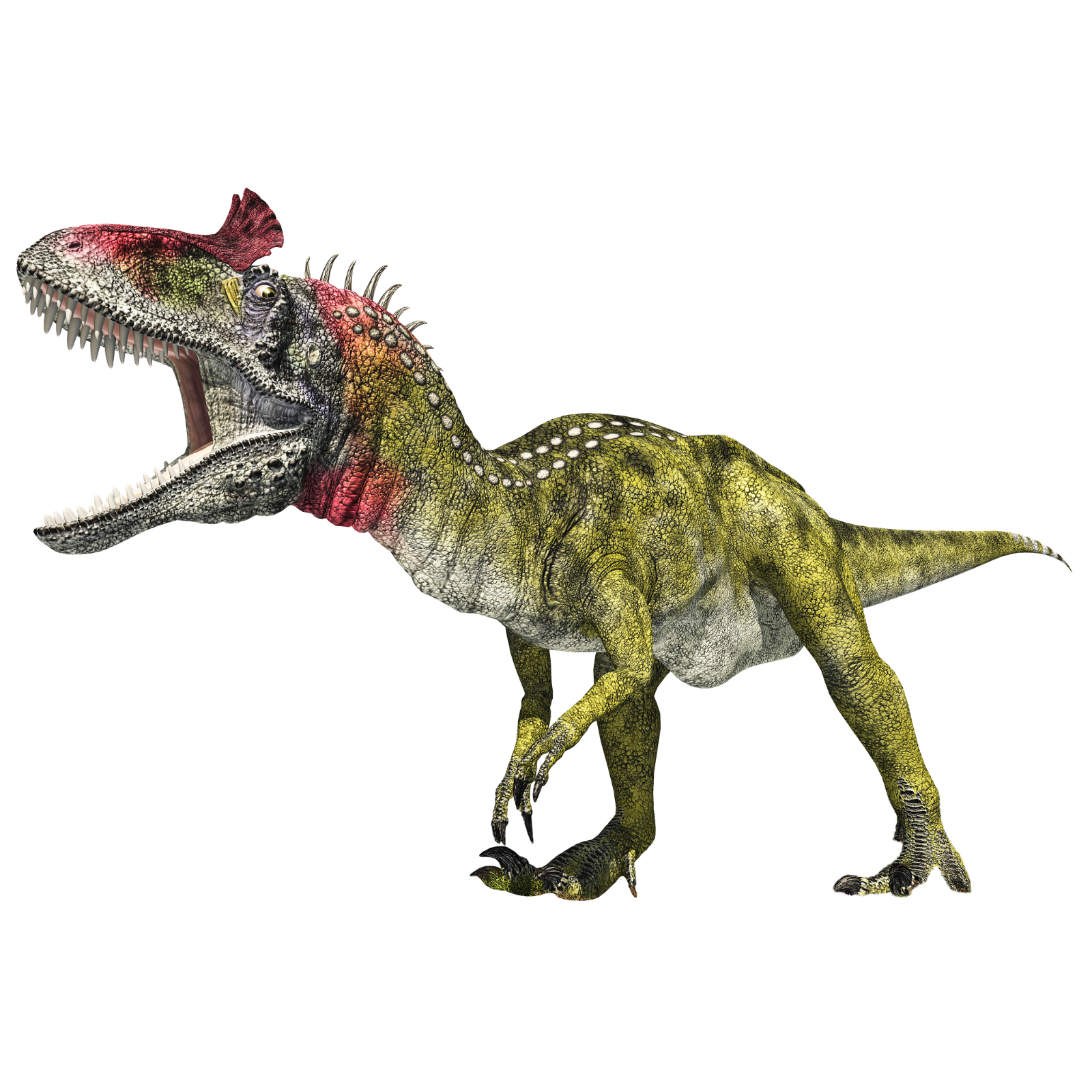
Cryolophosaurus is located along the Pride of Africa train route.
Presented by:
The Lutz Family